
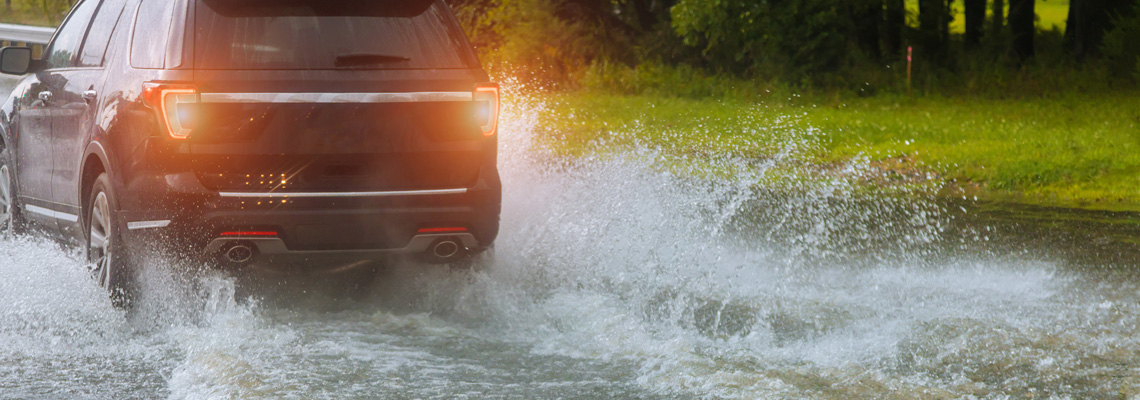
Who Is Responsible for Property Damage in a Stormy Weather Car Accident?
In most Florida storm-related crashes, responsibility for property damage falls on the driver whose careless driving caused the collision, not on the weather. Florida law requires drivers to adjust their speed and driving to the conditions, so rain, wind, or poor visibility is rarely a legal excuse. The at-fault driver’s property damage liability coverage is usually the first source of payment for your vehicle repairs, and your own collision or comprehensive coverage may fill gaps depending on your policy and what caused the damage.
The Sunshine State sees its share of challenging driving conditions, from the summer heat to afternoon downpours and hurricanes, and those conditions often lead to crashes that cause property damage and sometimes personal injuries. At the Law Offices of Scott Sobol, we have represented more than 1,000 clients and their families in personal injury matters, including car accident claims throughout Broward County and South Florida. Below, we explain how fault works when weather plays a role, who pays for vehicle damage, and how to protect your claim.
Time-Sensitive: Florida Law Limits Your Window to File
Most Florida negligence claims arising on or after March 24, 2023, including crash-related property damage claims, must be filed within two years.
More than 20 years handling South Florida injury claims. Free consultation. Contingency fee representation, with terms and costs in a written agreement.
Liability in Stormy Weather Car Accidents
Drivers in Florida have a legal duty to use reasonable care to avoid causing crashes, and that duty does not pause when the weather turns. If anything, what counts as reasonable changes with the conditions. A speed that is safe on a dry, sunny afternoon may be careless in a blinding downpour, and a following distance that works on clear pavement may not leave enough room to stop on a flooded road.
Several Florida traffic laws put this principle in writing. Section 316.183 prohibits driving at a speed greater than is reasonable and prudent under the conditions and the actual and potential hazards then existing, which means a driver can be negligent while staying under the posted limit. Section 316.217 requires vehicles to display lighted lamps during any rain, smoke, or fog. Florida also allows hazard lamps to be used while moving during periods of extremely low visibility on roads with a posted speed limit of 55 miles per hour or higher.
When a driver ignores these obligations and causes a crash, that driver may be held liable for the resulting property damage and other losses. The weather explains the setting, but in most cases the driving decisions made in that setting determine fault.
Common Driver Errors in Stormy Weather Crashes
Every crash is different, and a careful investigation is the only way to know what happened. That said, weather-related collisions in South Florida often trace back to a familiar set of choices:
- Speeding for the conditions: Driving at or near the posted limit when rain, standing water, or low visibility calls for a slower speed.
- Following too closely: Leaving too little space to stop on wet pavement, where stopping distances increase.
- Driving without headlights: Failing to turn on headlights during rain, as Florida law requires.
- Failing to signal: Changing lanes or turning without a signal when other drivers already have limited visibility.
- Driving through flooded roads: Entering standing water that can cause hydroplaning or stalling in a travel lane.
- Drowsy or distracted driving: Reduced attention at the moment conditions demand more of it.
- Choosing to drive when it is clearly unsafe: Heading out into conditions that make safe control of the vehicle unrealistic.
This is not a complete list, and other forms of negligence can cause a bad weather accident. Tire condition, worn wiper blades, and other maintenance issues can also become part of the fault analysis.
When Weather Truly Is to Blame
Some weather events cause damage that no driver could reasonably have prevented. A tree may fall onto a car during a hurricane, a sudden microburst may push a vehicle off the road, or lightning may strike a parked car. In those situations, a claim against another driver may not exist, and the other side may argue that the event was an act of God or a sudden emergency. Our articles on liability when an accident is caused by an act of God and proving car damage came from a lightning strike explore these scenarios in more detail.
These arguments are fact-specific. A storm that was forecast for hours, a road that had been flooding for some time, or a driver who kept going when others had pulled over can all undercut a claim that the weather alone was responsible. In some cases, a third party, such as a property owner or a government entity responsible for road maintenance or drainage, may share responsibility. Claims against government entities in Florida come with special notice requirements and limits on damages, so those claims need prompt attention.
Who Pays for Vehicle Damage After a Florida Storm Crash?
Florida is often called a no-fault state, but that label applies to injury benefits, not to vehicle damage. Property damage claims generally follow fault, and several insurance sources may be involved.
The At-Fault Driver’s Property Damage Liability Coverage
Under section 324.022, Florida vehicle owners and operators must maintain the ability to pay $10,000 for damage to the property of others in any one crash. When another driver causes the collision, a property damage claim against that driver’s liability coverage is usually the starting point. Because $10,000 may not cover a newer vehicle, other sources can become important.
Your Own Collision Coverage
Collision coverage is optional in Florida, but if you carry it, your insurer may pay for repairs after you satisfy your deductible, regardless of who was at fault. Your insurer may then seek reimbursement from the at-fault driver’s insurer, which in some cases can lead to recovery of your deductible as well.
Comprehensive Coverage for Non-Collision Weather Damage
Damage from flooding, falling trees, hail, or wind without a collision with another vehicle is typically handled under comprehensive coverage, if you carry it. Policy terms vary, so it is worth reviewing your declarations page and exclusions. If a storm-related insurance claim is denied or underpaid, our team also handles hurricane insurance claims.
PIP, Diminished Value, and Loss of Use
Personal Injury Protection pays a portion of medical expenses and lost income after a crash, but it does not pay for vehicle damage. Our guide to how Florida’s no-fault insurance system works explains how PIP interacts with other coverage. Depending on the facts, you may also be able to claim the reduced resale value of a repaired vehicle, discussed in our article on diminished value claims, along with reasonable rental or loss-of-use costs.
How Shared Fault Affects Your Property Damage Claim
Stormy weather crashes often involve arguments that more than one driver made mistakes. Florida’s 2023 tort reform law, HB 837, changed how that shared fault is handled. Under section 768.81(6), in a negligence action to which the section applies, a party found greater than 50 percent at fault for his or her own harm may not recover any damages. At 50 percent or less, the recovery is reduced by that party’s share of fault.
As a simple hypothetical, a driver with $12,000 in vehicle damage who is found 20 percent at fault would recover $9,600. If that same driver were found 51 percent at fault, they would recover nothing from the other driver. Our post on how Florida’s modified comparative negligence law affects car accident claims walks through the rule in more depth.
Steps to Protect Your Claim After a Storm-Related Crash
If you are able to do so safely, photograph the vehicles, the road surface, standing water, traffic signals, and the surrounding conditions before anything is moved. Weather changes quickly in South Florida, and a photo of a flooded intersection or a darkened traffic signal can be difficult to recreate later. Collect names and contact information from witnesses, and note whether other drivers had their headlights on.
Report the crash as required, and request a copy of the report once it is available. Our guide on how to properly report a car accident in Florida covers the basics. Dashcam video, nearby business cameras, and historical weather data can all help show what conditions looked like at the time. Notify your own insurer promptly, since most policies include notice requirements, and be cautious about giving a recorded statement to the other driver’s insurer before you understand your rights.
Deadlines for Florida Property Damage Claims
Under section 95.11, Florida Statutes, an action founded on negligence arising on or after March 24, 2023 generally must be filed within two years, down from the four years that applied before HB 837. That deadline covers lawsuits against an at-fault driver for vehicle damage as well as injuries. Claims under your own insurance policy can involve separate contractual notice and filing requirements, so review your policy early.
How a Car Accident Attorney Can Help
Stormy weather crashes can raise difficult fault questions, especially when the other side argues that the weather, rather than a driver, caused the collision. Our team can investigate the crash, gather weather and roadway evidence, identify every available insurance policy, calculate the full value of your property and injury losses, handle communications with insurers, and file paperwork correctly and on time.
Discuss Your Case With a Car Accident Attorney at the Law Offices of Scott Sobol
At the Law Offices of Scott Sobol, we give each client personal attention and clear answers about how Florida law applies to their situation. Scott Sobol has more than 20 years of experience in personal injury law, has represented more than 1,000 clients and their families, and is admitted to practice in Florida, Illinois, and Texas.
We handle car accident cases on a contingency fee, with terms and costs set out in a written agreement, and your first consultation is free. To discuss your stormy weather crash, complete our contact form.
Every case is different. Past results and prior experience do not guarantee a similar outcome in any future matter, and this article is general information rather than legal advice for your specific situation.
Frequently Asked Questions About Stormy Weather Car Accidents
Can a driver blame the weather to avoid liability for a Florida car accident?
A driver can raise the weather as a defense, but it rarely succeeds on its own. Florida law requires drivers to travel at a speed that is reasonable and prudent for the conditions and to use headlights in rain. If a driver failed to adjust to the weather and caused a crash, that driver may still be held responsible.
Does Florida PIP insurance pay for my car repairs?
No. PIP covers a portion of medical expenses and lost income after a crash, not vehicle damage. Repairs are generally paid through the at-fault driver’s property damage liability coverage or through your own collision or comprehensive coverage if you carry it.
Who pays if a tree falls on my car during a storm?
Damage from a falling tree without a collision is usually handled under comprehensive coverage, if your policy includes it. If a property owner knew or should have known the tree was dead or unstable, a claim against that owner may also be possible, depending on the facts.
What if the other driver’s property damage coverage is not enough?
Florida’s minimum property damage liability requirement is $10,000 per crash, which may not cover a newer vehicle. Your own collision coverage may pay the difference after your deductible, and a claim directly against the at-fault driver for the remaining amount may also be possible.
How long do I have to file a property damage lawsuit after a Florida car accident?
For negligence claims arising on or after March 24, 2023, Florida generally allows two years from the date of the crash to file a lawsuit against the at-fault driver. Claims under your own insurance policy may have separate notice requirements, so it is best to act promptly.

LEGALLY REVIEWED BY:
Scott Sobol
September 30, 2026
Recent Posts

You did everything right after your accident. You called the police, exchanged information at the scene, and gave a truthful stateme ...
A car accident can turn your life upside down in a matter of seconds. Between hospital visits, missed paychecks, and phone calls fro ...
Can You Still Recover Compensation If the At-Fault Driver Has No Bodily Injury Coverage in Florida? - 08/18/26
A car crash is stressful enough before you find out the other driver has almost no insurance at all. Many people assume that if some ...
