
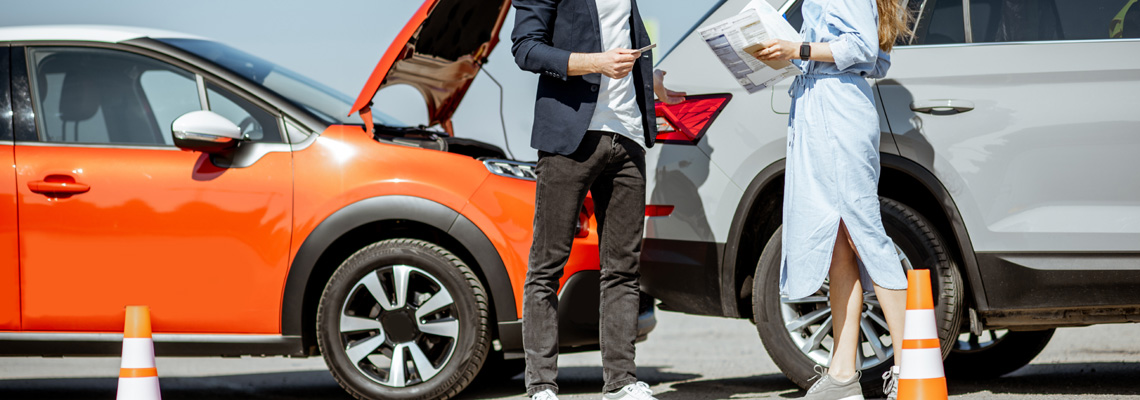
How to Prove Liability in a Florida Car Accident Claim
If you have suffered injuries in a car accident through no fault of your own, proving who caused the crash is the single most important part of your claim. Florida law requires you to establish four specific elements before you can recover compensation, and missing any one of them can weaken an otherwise strong case. Our team at The Law Offices of Scott Sobol helps clients gather the clear evidence needed to establish each element and build a claim that holds up under scrutiny from insurance adjusters and defense attorneys.
We have more than 20 years of experience working on car accident claims throughout Florida, and that experience has taught us what it takes to prove liability and pursue full compensation for a client’s losses. We communicate the terms of your claim clearly so you understand each step of the process and can potentially achieve full compensation for your damages.
What Do You Need to Prove in a Florida Car Accident Claim?
Every car accident case is different and requires a personalized approach to hold the liable party accountable. As the injured party, you carry the burden of proof, which means you must present evidence establishing the following four elements.
Duty of Care
Every driver on Florida roads owes a legal duty of care to the people around them, meaning a responsibility to operate their vehicle safely and follow traffic laws. Establishing that the at-fault party owed you this duty is usually the most straightforward element to prove, since simply being on the road as a driver, in most circumstances, creates that duty automatically.
Breach of Duty
After establishing that the liable party owed you a duty of care, you must demonstrate that they failed to meet it. We often prove this by showing that a reasonable driver would not have acted the way the at-fault party did under similar circumstances. In some situations, if the other driver violated a traffic law designed specifically to prevent the type of accident that occurred, such as running a red light or speeding through a school zone, that violation alone may support a finding of negligence, a concept sometimes called negligence per se under Florida law.
Direct Causation
Another element of proving fault involves showing that the at-fault party’s breach directly caused the accident and your resulting injuries. Florida courts generally look at two related questions here: whether the accident would not have happened but for the other driver’s actions, and whether your injuries were a foreseeable result of that conduct. We help establish causation by gathering evidence such as the following:
- Medical records connecting your treatment directly to the accident
- Police reports documenting the scene, citations, and officer observations
- Video surveillance or traffic camera footage capturing the collision
- Witness testimony from people who saw the crash occur
- Photos and videos of vehicle damage, road conditions, and the accident scene
- Vehicle data, such as event data recorder or “black box” information, when available
Many factors can contribute to a car accident, so we look closely at every available piece of evidence rather than relying on a single source. Combining several forms of evidence generally produces a stronger, more complete picture of what happened than any one item on its own.
Damages
Finally, you must present evidence showing the damages that resulted from the at-fault party’s negligence. Your injuries may carry physical, emotional, and financial costs, and all of them can potentially factor into your claim. We help calculate your claim’s worth by reviewing medical bills, pay stubs, and other financial records for economic damages, and by documenting how your injuries have affected your daily life to support non-economic damages such as pain and suffering.
Where Liability Evidence Comes From and How to Preserve It
Much of the evidence that proves fault is temporary. Businesses routinely record over surveillance video, vehicles get repaired or salvaged, and skid marks and debris are cleared within hours. The sooner a request goes out, the more likely the evidence still exists.
Police Reports and What They Can and Cannot Do
A crash report often identifies the drivers, witnesses, citations, and the officer’s observations of the scene, which makes it a useful starting point. It is not a final ruling on fault, however. Under Florida Statute 316.066, statements a driver makes to an officer for the purpose of completing the crash report generally cannot be used as evidence in a civil or criminal trial, so the rest of your evidence has to carry the weight. Our guide to the role of a police report in a Florida car accident claim explains this in more detail.
Video, Public Records, and Digital Data
Traffic cameras, dashcams, doorbell cameras, and nearby business surveillance can capture the moments before a crash. Public agencies may also hold 911 recordings, dispatch logs, and road maintenance records. Our articles on obtaining traffic camera footage in Florida and using Florida’s public records laws to strengthen an accident claim walk through how that evidence is requested. When a crash happened with nobody else around, our guide on recovering damages after a car accident with no witnesses covers the alternatives.
Common Liability Scenarios in Florida Car Accidents
Certain crash types come with their own legal starting points, and knowing them helps you understand where the insurance company is likely to push back.
Rear-End Collisions
Florida courts apply a rebuttable presumption that the driver who rear-ends another vehicle was negligent. In Birge v. Charron (2012), the Florida Supreme Court held that the presumption can be overcome when the rear driver produces evidence that the front driver was also negligent, such as a sudden and unexpected stop, in which case a jury decides how fault is divided. That is why disputes like brake-checking claims often turn on dashcam footage and witness accounts.
Crashes Involving Someone Else’s Vehicle
Under Florida’s dangerous instrumentality doctrine, the owner of a vehicle can generally be held responsible when they allow another person to drive it and that driver causes a crash through negligence. This can matter when the at-fault driver has little or no insurance, because it may open the owner’s policy as another source of recovery. Rental and leasing companies are subject to separate statutory limits, so these claims require a careful look at who owned the vehicle and on what terms.
How Florida’s Comparative Negligence Rule Affects Your Case
Proving the other driver’s fault does not always mean the insurance company will accept it without pushback. Florida operates under a modified comparative negligence standard, established under Florida Statute 768.81, which was changed significantly by 2023 legislation. Previously, Florida followed a pure comparative negligence rule that allowed an injured person to recover some compensation even if they were up to 99 percent at fault. Under the current modified rule, you can still recover damages reduced by your percentage of fault, but only if you are found to be 50 percent or less at fault for the accident. If you are found more than 50 percent responsible, Florida law bars you from recovering compensation entirely.
This change makes proving the other driver’s fault, and defending against attempts to inflate your own share of it, more important than ever. Insurance companies routinely look for ways to argue that an injured claimant contributed to their own accident, since even a modest shift in fault percentage can significantly reduce or eliminate a payout. Strong, well-documented evidence of the other driver’s breach and causation directly protects you against these tactics. Our overview of Florida’s modified comparative negligence rule explains how fault percentages are applied.
How Florida’s Statute of Limitations Affects Your Claim
Beyond proving liability, you also need to act within Florida’s legal deadlines. Under the same 2023 legislative changes, Florida Statute 95.11 now generally gives you two years to file a negligence-based car accident lawsuit, down from the previous four-year period, for causes of action accruing on or after March 24, 2023. Waiting too long to gather evidence can also make it harder to prove liability in the first place, since witness memories fade, surveillance footage gets overwritten, and physical evidence at the scene disappears.
What if Multiple Parties Share Fault?
Not every accident involves a single at-fault driver. When a crash involves several vehicles, determining fault in a multi-car accident can become significantly more complex, since more than one driver’s actions may have contributed to the outcome. In these situations, Florida’s comparative negligence framework still applies, but it may need to be applied to multiple parties simultaneously, each carrying their own percentage of fault, which can affect how much any single insurer is required to pay toward your damages.
Proving Liability in Unusual Circumstances
Even straightforward-seeming accidents can involve complications, and some situations raise unique liability questions. So-called “act of God” cases, such as accidents caused by sudden severe weather, illustrate this well. Florida law does not automatically excuse a driver from liability simply because weather or another unusual condition played a role. If a driver failed to adjust their behavior appropriately for known hazardous conditions, such as driving too fast during heavy rain, they may still be found negligent despite the presence of an unusual triggering event.
How Insurance Companies Try to Dispute Liability
Even when the facts of an accident seem clear, insurance adjusters rarely accept liability without some pushback. Insurers are businesses focused on minimizing payouts, and disputing or minimizing fault is one of the most direct ways to reduce what they owe. Common tactics include arguing that you contributed to the accident through your own actions, questioning whether your injuries are truly connected to the crash, or pointing to gaps in the documentation to suggest the evidence is incomplete.
Recorded statements are a particularly common tool adjusters use early in a claim. An adjuster may ask seemingly casual questions about how the accident happened, hoping to get you to say something that can later be used to shift blame or minimize your injuries. We generally advise clients to avoid giving a recorded statement to the other driver’s insurance company without legal guidance, since even an innocent answer can be taken out of context later in the claims process. If the insurer has already refused to accept fault, our guide on what to do when the at-fault driver’s insurance denies your claim covers the next steps.
Building a Timeline That Supports Your Claim
Beyond the four legal elements themselves, a clear and consistent timeline of events often makes the difference between a claim that resolves smoothly and one that faces resistance. This includes the moments immediately before the crash, the collision itself, and the aftermath, including how quickly you sought medical treatment and how consistently you followed through with recommended care.
Gaps in treatment or delays in seeking medical attention are frequently used by insurance companies to argue that an injury was not serious, or was not caused by the accident at all. Keeping consistent medical appointments and following your provider’s recommendations, in addition to supporting your recovery, also helps preserve the strength of your claim’s timeline.
Social media activity can also affect this timeline in ways many people do not anticipate. A photo or post showing physical activity, even something unrelated to your recovery, can be taken out of context and used to suggest your injuries are less serious than documented. We generally recommend being cautious about what you post online while a claim is pending, since insurance investigators routinely review public profiles as part of their evaluation. Our article on how social media can impact your personal injury case explains what to avoid.
How We Help You Prove Liability
Proving fault in a Florida car accident claim is rarely as simple as it first appears, even in cases that seem straightforward. Attorney Scott Sobol and our team at The Law Offices of Scott Sobol bring more than 20 years of experience handling car accident claims throughout Broward County, giving us a detailed understanding of what it takes to establish each element of a negligence claim.
We build a plan based on the specific facts of your case, and we handle car accident claims on a contingency fee basis, with the fee terms and how case costs are handled set out in a written agreement before we begin. From the earliest stages of your claim, we work to identify every available source of evidence, anticipate how the insurance company is likely to respond, and prepare your case as though it may eventually need to go to trial, even when we expect it to settle.
To discuss your accident and how we can help you prove liability, fill out our contact form to get started.
Frequently Asked Questions About Proving Liability in a Florida Car Accident
What are the four elements I need to prove in a Florida car accident claim?
You generally need to show that the other driver owed you a duty of care, that they breached that duty through careless or reckless driving, that the breach directly caused the accident and your injuries, and that you suffered measurable damages as a result.
What happens if I am partially at fault for the accident?
Florida’s modified comparative negligence rule allows you to recover compensation reduced by your percentage of fault, as long as you are found to be 50 percent or less responsible for the accident. If you are found more than 50 percent at fault, Florida law generally bars recovery entirely.
What kind of evidence is most useful for proving fault?
Police reports, photos and video from the scene, witness statements, medical records connecting your injuries to the crash, and vehicle data such as event data recorder information can all support your claim. Combining multiple types of evidence generally builds a stronger case than relying on just one source.
Does a traffic ticket prove the other driver was at fault?
Not on its own. A citation can support your claim, and violating a traffic safety law may be evidence of negligence, but the insurance company and a jury will still look at all of the evidence. Statements drivers give an officer for the crash report are also generally not admissible at trial in Florida, so photos, video, witnesses, and medical records remain important.
Is the driver who rear-ends me always at fault in Florida?
Florida presumes the rear driver was negligent, but that presumption can be rebutted. If the rear driver produces evidence that the front driver also acted negligently, such as stopping suddenly and without reason, a jury can divide fault between both drivers under the comparative negligence rule.
How long do I have to file a car accident claim in Florida?
For accidents occurring on or after March 24, 2023, Florida generally allows two years from the date of the accident to file a negligence-based lawsuit. Accidents before that date may still fall under the prior four-year deadline, so confirming your exact timeline with an attorney is important.
Does bad weather excuse a driver from liability for an accident?
Not automatically. Florida law still expects drivers to adjust their behavior for known hazardous conditions, such as heavy rain or fog. A driver who fails to slow down or take reasonable precautions during bad weather may still be found negligent even though the weather played a role.

LEGALLY REVIEWED BY:
Scott Sobol
October 10, 2026
Recent Posts

You did everything right after your accident. You called the police, exchanged information at the scene, and gave a truthful stateme ...
A car accident can turn your life upside down in a matter of seconds. Between hospital visits, missed paychecks, and phone calls fro ...
Can You Still Recover Compensation If the At-Fault Driver Has No Bodily Injury Coverage in Florida? - 08/18/26
A car crash is stressful enough before you find out the other driver has almost no insurance at all. Many people assume that if some ...
