
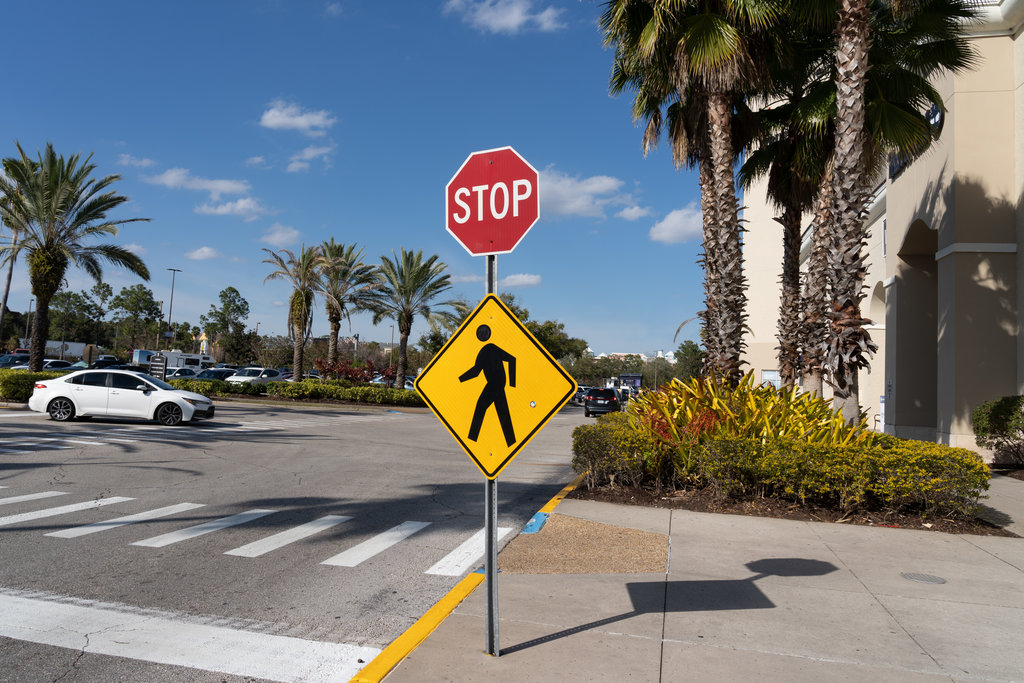
Can a Pedestrian Be Liable for a Florida Car Accident?
Yes, a pedestrian can be partly or even mostly liable for a Florida car accident. Under Florida’s modified comparative negligence rule, a pedestrian’s share of fault reduces what they can recover from the driver, and a pedestrian found more than 50 percent at fault is barred from recovering damages. Separately, Florida’s no-fault Personal Injury Protection (PIP) system may still pay a portion of a pedestrian’s medical bills and lost income regardless of who caused the crash.
The Law Offices of Scott Sobol has spent more than 20 years handling pedestrian accident cases throughout South Florida and has represented more than 1,000 clients and their families. This post focuses on the money side of a pedestrian claim: how fault percentages are assigned, how PIP coverage applies to people on foot, and what happens when a pedestrian’s own actions are part of the story.
Time-Sensitive: Two Florida Deadlines Apply
Seek medical care within 14 days to preserve PIP benefits, and file most negligence claims within two years of the crash.
Free consultation. Contingency fee representation. Direct communication with your attorney.
Florida’s Modified Comparative Negligence System
Florida changed its approach to shared liability in 2023. For negligence claims governed by House Bill 837, which took effect on March 24, 2023, the state replaced its pure comparative negligence system with a modified comparative negligence framework. Under this new system, now codified in section 768.81(6), a party found greater than 50 percent at fault for their own harm may not recover any damages. A pedestrian at exactly 50 percent can still recover half of their damages.
This change significantly affects pedestrian accident cases because it creates a threshold that did not exist before. Previously, even if a pedestrian was 80 percent at fault, they could still recover 20 percent of their damages from the driver. Now, the focus shifts to keeping the pedestrian’s fault percentage at or below the 50 percent mark to preserve the right to compensation.
Insurance companies and defense attorneys understand this threshold well, and they may work hard to shift blame onto pedestrians, knowing that a finding above 50 percent eliminates the driver’s liability for damages entirely. For a broader look at the rule across all injury types, see our guide to Florida’s modified comparative negligence rule.
Two Separate Tracks: PIP Benefits and the Fault-Based Claim
Many pedestrians are surprised to learn that a Florida pedestrian injury usually involves two different kinds of recovery that follow different rules. Keeping them separate makes the fault question much easier to understand.
The first track is PIP. Florida is a no-fault state, and under section 627.736, PIP pays 80 percent of reasonable, medically necessary medical expenses and 60 percent of lost income, up to a combined $10,000, without regard to who caused the crash. A pedestrian who was partly at fault, or even mostly at fault, may still receive PIP benefits if coverage applies.
The second track is the fault-based claim against the driver and the driver’s bodily injury liability insurance. This is where comparative negligence applies, where pain and suffering can be pursued if the injury is serious enough, and where a pedestrian’s share of fault reduces or bars the recovery. Our overview of how Florida’s no-fault insurance system works explains the PIP side in more detail.
Which PIP Policy Covers a Pedestrian?
Section 627.736(4)(e) sets out whose PIP pays when a person is injured in Florida while not in a vehicle and the injury is caused by physical contact with a motor vehicle. In general terms, coverage is sought in this order:
- Your own policy: If you own a vehicle insured with Florida PIP, your policy generally covers you as a pedestrian.
- A resident relative’s policy: If you do not own a vehicle, the PIP of a relative who lives in your household may apply.
- The striking vehicle’s policy: If neither applies and you are a Florida resident, the PIP on the vehicle that hit you may provide benefits.
The residency requirement matters for visitors. A tourist who does not own a Florida-insured vehicle may not be able to claim PIP from the car that hit them, which can make the fault-based claim and any coverage from home more important. Our posts on liability when visitors are injured as pedestrians and personal injury claims for tourists in Florida cover that situation.
PIP Limits and the 14-Day Rule
PIP medical benefits generally require initial treatment within 14 days of the crash. The full $10,000 is available only when a qualified provider determines that you had an emergency medical condition; otherwise, medical benefits are capped at $2,500. Because these limits are low compared with the cost of a serious pedestrian injury, the fault-based claim often carries most of the financial weight.
Stepping Outside PIP for Pain and Suffering
Under section 627.737(2), you can pursue damages for pain, suffering, and mental anguish against the at-fault driver only if the injury involves significant and permanent loss of an important bodily function, a permanent injury within a reasonable degree of medical probability, significant and permanent scarring or disfigurement, or death. Pedestrian injuries such as fractures, head trauma, and spinal injuries frequently meet this threshold, but it must be supported by medical evidence.
How Comparative Fault Changes the Math
Once the fault-based claim is in play, the pedestrian’s fault percentage is applied to the total damages. As a simple hypothetical, suppose a pedestrian’s damages beyond PIP total $300,000:
At 0 percent pedestrian fault, the pedestrian may recover the full $300,000. At 20 percent, the recovery drops to $240,000. At 50 percent, it drops to $150,000. At 51 percent, the pedestrian recovers nothing from the driver, even though the driver was 49 percent responsible. That single percentage point is why the evidence of who did what, and when, is so heavily contested.
PIP benefits already paid are generally not recoverable again from the driver, so the liability claim focuses on losses PIP does not cover. The exact calculation in a real case depends on the coverages involved and the facts, which is why every case needs individual review.
Can a Pedestrian Be Liable to the Driver or Others?
Liability can run in both directions. A pedestrian who causes a crash, for example by running into traffic and forcing a driver to swerve into another car, may face a claim from the driver or from other people injured in the resulting collision. The same comparative negligence principles apply, and the pedestrian’s share of fault would be weighed against everyone else’s. These situations are less common, but they are one more reason not to discuss fault with an insurer before getting legal advice.
Common Situations Where Pedestrians May Share Liability
Several scenarios can lead to shared liability between pedestrians and drivers in Florida accidents. Jaywalking is one of the most common examples, particularly when pedestrians cross mid-block or outside designated crosswalks. While jaywalking does not automatically make a pedestrian fully liable, it can contribute to fault allocation, especially if the crossing played a role in causing the accident.
Pedestrians who enter roadways while intoxicated or under the influence of drugs may also bear significant responsibility for accidents. Impairment affects judgment, reaction time, and awareness of surroundings, potentially leading to dangerous decisions like stepping into traffic unexpectedly or failing to notice oncoming vehicles.
Distracted walking has become increasingly common with the rise of smartphones and portable devices. Pedestrians who are texting, talking on phones, or wearing headphones may fail to notice traffic signals, approaching vehicles, or other hazards. Similarly, pedestrians who ignore traffic control devices, such as crossing against red lights or “Don’t Walk” signals, may share fault for resulting accidents.
Weather conditions and visibility issues can also affect liability determinations. Pedestrians wearing dark clothing at night, walking in areas with poor lighting, or failing to make themselves visible to drivers may contribute to accidents, though drivers still have duties to exercise reasonable care under the circumstances. For a myth-by-myth look at when drivers are and are not at fault, see our post asking whether drivers are always at fault in Florida pedestrian accidents, and our companion piece on driver duties and the evidence that proves them.
How Courts and Insurance Companies Determine Fault
Determining fault percentages in pedestrian accidents involves analyzing multiple factors and evidence sources. Police reports provide initial assessments, but they do not determine legal liability conclusively, and under Florida law the crash report itself generally cannot be used as evidence at trial. Our guide to the role of a police report in your Florida car accident claim explains why. Insurance adjusters and attorneys examine witness statements, traffic camera footage, cell phone records, and accident reconstruction analysis to build a complete picture of what happened.
Florida traffic laws provide important guidelines for both drivers and pedestrians. Under section 316.130, pedestrians must use sidewalks where they are provided, may cross only in marked crosswalks between adjacent signalized intersections, and must yield the right-of-way to vehicles when crossing outside a marked crosswalk or an unmarked crosswalk at an intersection. However, the same statute requires every driver to exercise due care to avoid colliding with any pedestrian, even when the pedestrian is violating traffic laws.
The specific circumstances of each case heavily influence fault determinations. Factors such as weather conditions, time of day, location of the accident, vehicle speed, and the actions of both parties in the moments leading up to impact all play roles in liability analysis. Insurance companies often use computer modeling and accident reconstruction specialists to analyze these scenarios.
Even when pedestrians bear some responsibility, drivers rarely escape liability entirely unless the pedestrian’s actions were unforeseeable and unavoidable. Car accident cases involving pedestrians require careful legal analysis to reach a fair allocation of fault and a recovery that reflects the full extent of the injuries.
When the Driver’s Insurance Is Not Enough
Serious pedestrian injuries can quickly exceed a driver’s bodily injury liability limits, and Florida does not require drivers to carry bodily injury liability coverage in most situations. If the driver has no coverage or too little, uninsured or underinsured motorist coverage on your own auto policy, if you carry it, may help close the gap. Our post on who is liable when a driver without insurance causes your crash walks through those options.
Statute of Limitations for Florida Pedestrian Claims
For negligence claims arising on or after March 24, 2023, section 95.11, Florida Statutes, generally requires a lawsuit to be filed within two years of the crash, shortened from four years under prior law. Wrongful death claims also carry a two-year deadline, measured from the date of death.
Fault disputes take time to investigate, and key evidence such as surveillance video can disappear quickly. Missing the filing deadline generally ends the claim permanently, so contacting an attorney early protects both your evidence and your rights.
Contact The Law Offices of Scott Sobol for Your Pedestrian Accident Case
Pedestrian accident cases involving shared liability call for careful legal representation that understands Florida’s comparative negligence and PIP rules. Our firm has represented more than 1,000 clients in personal injury matters throughout South Florida, including cases where fault is disputed. We investigate these accidents thoroughly, work with accident reconstruction and medical professionals when a case calls for it, and build claims designed to keep fault allocations accurate. Scott Sobol brings more than two decades of personal injury experience and is admitted to practice in Florida, Illinois, and Texas.
We work on a contingency fee basis, so you generally pay no attorney’s fee unless your case results in a recovery. If you have been injured in a pedestrian accident, do not let questions about liability keep you from seeking the compensation your claim supports. Contact us today to schedule your free consultation and learn how we can help protect your rights.
Every case is different. Past results and prior experience do not guarantee a similar outcome in any future matter, and this article is general information rather than legal advice for your specific situation.
Frequently Asked Questions About Pedestrian Liability in Florida
Does PIP cover me if I was hit by a car while walking in Florida?
Often, yes. Your own PIP generally applies first if you own a Florida-insured vehicle, then the PIP of a relative you live with, and then, for Florida residents, the PIP on the vehicle that struck you. PIP pays regardless of fault, but you generally must seek initial treatment within 14 days of the crash.
Can I get PIP benefits if the accident was my fault as a pedestrian?
PIP is no-fault coverage, so benefits generally do not depend on who caused the crash. Your share of fault matters for the separate claim against the driver, where being found more than 50 percent at fault bars recovery of damages under Florida’s modified comparative negligence rule.
What happens if I am found exactly 50 percent at fault?
At 50 percent, you can still recover, but your damages are reduced by half. The bar under section 768.81(6) applies only when a person is found greater than 50 percent at fault for their own harm.
Can a pedestrian be sued by the driver after an accident?
It is possible. If a pedestrian’s negligence causes a crash that injures the driver or others, those parties may bring a claim against the pedestrian, and comparative fault principles would apply. This is uncommon, but it is a good reason to avoid discussing fault with insurers before speaking with an attorney.
Do tourists injured as pedestrians in Florida get PIP coverage?
Not always. PIP from the striking vehicle is generally available to other pedestrians only if they are Florida residents. Visitors may need to rely on the fault-based claim against the driver, their own coverage from home, or other available insurance, so early review of the policies involved is important.

LEGALLY REVIEWED BY:
Scott Sobol
October 10, 2026
Recent Posts

You did everything right after your accident. You called the police, exchanged information at the scene, and gave a truthful stateme ...
A car accident can turn your life upside down in a matter of seconds. Between hospital visits, missed paychecks, and phone calls fro ...
Can You Still Recover Compensation If the At-Fault Driver Has No Bodily Injury Coverage in Florida? - 08/18/26
A car crash is stressful enough before you find out the other driver has almost no insurance at all. Many people assume that if some ...
