How Is Fault Determined in a Multi-Car Accident?
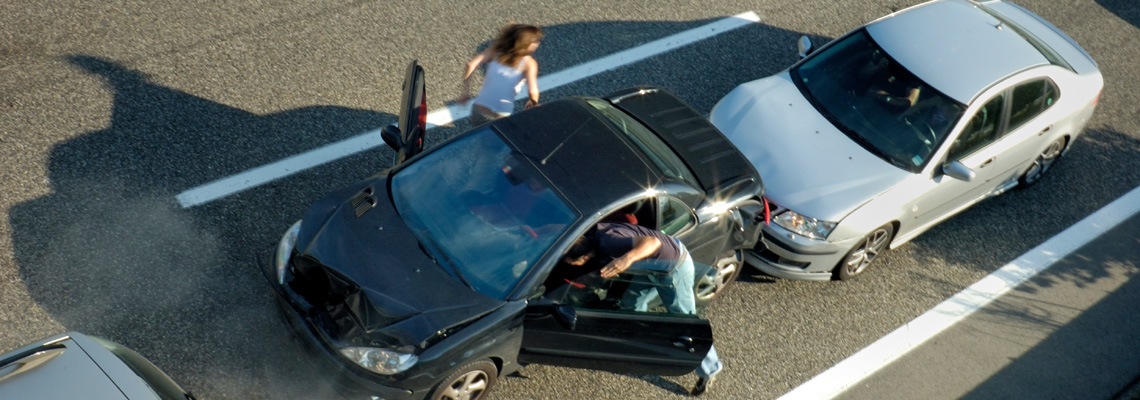
Florida law does not automatically assign fault to any one driver simply because a crash involved several vehicles. Fault in a multi-car accident is determined the same way it is in any car accident claim: by identifying which driver, or drivers, breached the duty to operate their vehicle safely and caused the resulting harm. Because multi-vehicle collisions often unfold in seconds and involve conflicting accounts from several parties, establishing exactly how fault should be divided typically requires a careful review of the physical evidence, the sequence of impacts, and the actions each driver took in the moments before the crash.
Multi-car accidents often result in life-altering injuries, extended hospital stays, and long absences from work, placing a heavy financial and emotional burden on everyone involved. If you were hurt in a multi-vehicle crash in Florida, the Law Offices of Scott Sobol can review the circumstances of your case and help you understand how fault may be allocated among the drivers involved. We have spent more than two decades helping South Florida families pursue compensation after serious car accidents, and we bring that same experience to every car accident claim we handle.
How Florida Law Approaches Fault in a Multi-Vehicle Collision
Every driver in Florida owes other motorists a duty of reasonable care, which generally means maintaining a safe following distance, obeying traffic control devices, and adjusting driving behavior to road and weather conditions. When a driver breaches that duty and the breach contributes to a collision, that driver may bear some percentage of legal responsibility for the resulting damages.
In a two-car accident, the fault analysis is often simpler because there are only two versions of events to reconcile. Multi-car accidents complicate that analysis considerably. A single initiating event, such as one driver braking suddenly or merging without checking a blind spot, can set off a chain reaction that involves three, four, or more vehicles. Each additional vehicle introduces another set of variables, and following distance, reaction time, speed, and road position all factor into how fault is ultimately divided.
Florida’s Modified Comparative Negligence Standard
Florida applies a modified comparative negligence standard to personal injury claims, including those arising from multi-car accidents. Under this framework, more than one driver can be found partially at fault for the same collision, and each driver’s compensation, if pursued, is reduced by their own percentage of fault. A driver who is found more than 50 percent at fault for causing the accident is generally barred from recovering compensation from the other parties involved.
This standard, codified in Florida Statute 768.81, replaced the state’s previous pure comparative negligence rule in March 2023. The change means that in a multi-car pileup where several drivers may share responsibility, the precise percentage assigned to each party can significantly affect how much compensation an injured person may recover. Because insurance companies are well aware of this threshold, they often work to shift as much fault as possible onto other drivers, including injury victims, to reduce their own exposure.
Common Fault Patterns Investigators Look for in Chain-Reaction Crashes
While every multi-car accident has to be evaluated on its own facts, certain patterns tend to recur in these investigations. None of the following should be treated as a fixed rule; they are simply factors that adjusters, attorneys, and courts commonly examine when reconstructing a multi-vehicle crash.
- Following distance: A driver who was following too closely may have had less time to react to a sudden stop ahead.
- Point of initial impact: Investigators often trace the sequence of collisions backward from the last vehicle to the first to understand how the chain reaction started.
- Braking and skid evidence: Skid marks, crush patterns, and vehicle telematics data can indicate how quickly each driver reacted.
- Traffic signal and right-of-way violations: A driver who ran a red light or failed to yield at an intersection may bear significant responsibility even in a crash involving many cars.
In rear-end chain reactions, it is common for investigators to look closely at whether each following driver maintained a safe distance, since that single factor can determine whether a driver contributed to the pileup or was simply caught up in a collision started by the vehicle behind them. Chain-reaction accidents can also begin with sudden, unpredictable events, such as a tire blowout or a vehicle stopping abruptly to avoid road debris, which can shift the fault analysis away from any single following driver.
Evidence Used to Establish Fault After a Multi-Car Accident
Because multiple drivers are often involved, and because each may recall the sequence of events differently, a thorough investigation typically draws on several sources of evidence rather than any one account.
Police Reports and Citations
The responding officer’s report often includes a preliminary assessment of how the crash occurred, along with any citations issued. While a police report is not the final word on fault, it can carry significant weight with insurance adjusters and, later, with a jury.
Traffic and Surveillance Camera Footage
Many intersections and highways in South Florida are monitored by traffic or surveillance cameras. When available, this footage can provide an objective, moment-by-moment account of how a multi-car accident unfolded. Learn more about how traffic camera footage can be obtained and used to support an accident claim.
Vehicle Data and Event Data Recorders
Modern vehicles are often equipped with event data recorders that capture speed, braking, and other information in the seconds before a crash. This data can help establish whether a driver was speeding, braked in time, or failed to react at all.
Witness Statements
Independent witnesses who saw the crash unfold, particularly those not involved in any of the vehicles, can offer valuable perspective on the sequence of events and help corroborate or contradict the accounts given by the drivers involved.
How Insurance Companies Handle Multi-Car Accident Claims
When several vehicles and, often, several insurance carriers are involved in a single accident, the claims process can become significantly more complicated than a standard two-car collision. Each insurance company generally has an interest in minimizing the amount it pays out, which can mean disputing fault, arguing that another driver’s actions were the primary cause, or challenging the extent of a claimant’s injuries.
After a multi-car accident, it’s common for drivers to blame each other, which can complicate the process of establishing liability. Adjusters may reach out quickly after a crash to request a recorded statement, hoping to secure comments that can later be used to argue a claimant shares more fault than the evidence supports. You are not required to provide a detailed recorded statement to another driver’s insurance company, and doing so without guidance can work against your interests.
Time Limits to File a Multi-Car Accident Claim in Florida
Florida law generally gives accident victims two years from the date of the crash to file a personal injury lawsuit. This deadline applies to multi-car accident claims just as it does to any other type of car accident case, and missing it can permanently bar you from pursuing compensation in court. You can review Florida’s statute of limitations for injury lawsuits to understand how this deadline may apply to your situation, though the sooner an investigation into a multi-car accident begins, the easier it typically is to preserve evidence before it disappears.
What to Do if You Are Unsure Who Caused a Multi-Car Accident
It is common for accident victims to leave the scene of a multi-car pileup without a clear picture of how the crash happened, especially if they were struck from behind or caught in the middle of a chain reaction. You are not required to determine fault yourself, and you should avoid speculating about who caused the accident, either at the scene or when speaking with insurance representatives. Statements made in the confusion immediately after a crash are sometimes inaccurate and can be used against you later if they conflict with the evidence.
Instead, focus on seeking medical attention, reporting the accident to law enforcement, and documenting the scene as thoroughly as you reasonably can, through photographs of vehicle positions, damage, and any visible road hazards. An experienced car accident attorney can take over the fault investigation from there, gathering the evidence needed to determine how responsibility should be allocated among the drivers involved.
How a Car Accident Attorney Can Assist You
Handling a multi-car accident claim on your own can feel overwhelming, especially while you are recovering from your injuries. At The Law Offices of Scott Sobol, our attorneys help accident victims focus on their health while we manage the legal and investigative work behind their claim. We also represent clients throughout Broward County in personal injury claims of all kinds, including complex multi-vehicle collisions. Some of the ways we can assist with a multi-car accident claim include the following:
- Investigating every detail of the collision, including the sequence of impacts among all vehicles involved
- Filing all paperwork correctly and within Florida’s applicable deadlines
- Negotiating with every insurance company involved in the claim
- Collecting evidence and witness testimony to support your version of events
- Advocating for your rights and interests throughout negotiations and, if necessary, litigation
- Answering your legal questions and keeping you informed on the status of your claim
Our attorneys take a tailored approach to every case, since the fault analysis in a multi-car accident can shift considerably depending on the number of vehicles, the road conditions, and the evidence available.
Discuss Your Case With an Experienced Car Accident Attorney at the Law Offices of Scott Sobol
If you were injured in a multi-car accident in Florida, the attorneys at the Law Offices of Scott Sobol are ready to help you understand your legal options. We can review the evidence in your case, help identify which parties may share responsibility, and advocate for the compensation you may be entitled to while you focus on your recovery.
Don’t wait to get the guidance you need. Fill out our contact form to schedule a free consultation with the Law Offices of Scott Sobol today.
Frequently Asked Questions About Multi-Car Accident Fault in Florida
Can more than one driver be at fault in a Florida multi-car accident?
Yes. Florida applies a modified comparative negligence standard, which means more than one driver can be assigned a percentage of fault for the same accident. Each driver’s potential compensation is reduced by their own share of fault, and a driver found more than fifty percent responsible is generally barred from recovering damages from the other parties involved.
Is the last car in a chain-reaction accident always the one at fault?
Not necessarily. While a following driver who failed to maintain a safe distance is often found to share responsibility, chain-reaction accidents can also begin with a sudden event further up the line, such as a driver braking abruptly or a vehicle stopping to avoid road debris. Each case depends on the specific evidence gathered during the investigation.
What happens if I am found partially at fault for a multi-car accident?
Under Florida’s modified comparative negligence system, you may still be able to recover compensation even if you bear some responsibility for the accident, as long as your share of fault is fifty percent or less. Your total compensation would be reduced by your assigned percentage of fault.
How long do I have to file a claim after a multi-car accident in Florida?
Florida generally allows two years from the date of the crash to file a personal injury lawsuit. This deadline can vary depending on the specific circumstances of a case, so it is best to speak with an attorney as soon as possible after a multi-car accident to avoid missing any applicable filing window.
What evidence helps establish fault in a multi-vehicle crash?
Police reports, traffic or surveillance camera footage, vehicle event data recorders, skid mark and crush pattern analysis, and independent witness statements are among the most common types of evidence used to reconstruct how a multi-car accident occurred and how fault should be allocated among the drivers involved.
LEGALLY REVIEWED BY:
Scott Sobol
August 12, 2026
Recent Posts

You did everything right after your accident. You called the police, exchanged information at the scene, and gave a truthful stateme ...
A car accident can turn your life upside down in a matter of seconds. Between hospital visits, missed paychecks, and phone calls fro ...
Can You Still Recover Compensation If the At-Fault Driver Has No Bodily Injury Coverage in Florida? - 08/18/26
A car crash is stressful enough before you find out the other driver has almost no insurance at all. Many people assume that if some ...
