

Are Hidden Cameras Legal for Insurance Investigations in Florida?
After filing a personal injury claim, most people expect the hard part is behind them. What many do not realize is that insurance companies may already be watching. Surveillance is a real and routine tactic used by insurers across Florida, and understanding where the legal lines are drawn can make a significant difference in how your claim unfolds.
At the Law Offices of Scott Sobol, we have spent more than 20 years helping injured people navigate the claims process in South Florida, including situations where insurance companies use surveillance to challenge legitimate injuries. Our car accident clients frequently ask whether being recorded by an insurer is even legal, and the answer depends entirely on where, when, and how that recording takes place.
The Short Answer: It Depends on Location
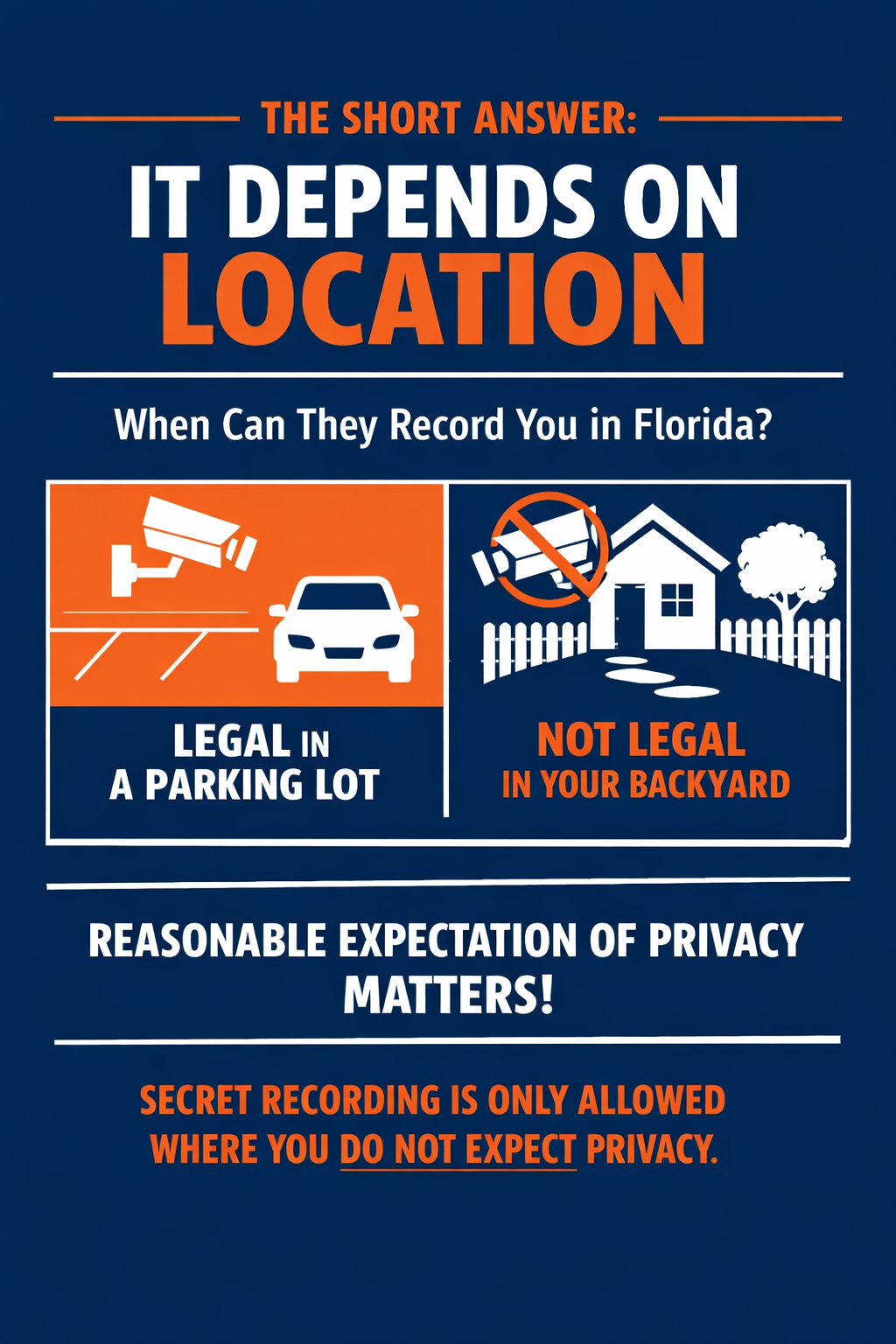
Insurance companies and the private investigators they hire are permitted to record you in Florida, but only under certain conditions. The key legal concept is the “reasonable expectation of privacy.” Under Florida Statute § 810.145, it is unlawful to use an imaging device to secretly observe or record a person in a place where that person reasonably expects to be in private. In plain terms, what is legal in a parking lot is not legal in your backyard.
In public spaces, including sidewalks, parking lots, storefronts, parks, and roadways you generally have no reasonable expectation of privacy. Investigators are permitted to film you in these areas without your knowledge or consent. Courts in Florida have long recognized that insurance companies have a legitimate interest in verifying injury claims, and that surveillance conducted properly in public serves that interest.
Where Insurance Investigators Cross the Line
The boundaries matter significantly. If an investigator peers through your windows, films inside your home, or records you in a space where you are reasonably shielded from public view, that surveillance may be illegal. Private spaces where you retain a reasonable expectation of privacy, including your residence, a gym locker room, a medical facility, or a private office are off-limits for hidden recording.
The Audio Recording Rule
Video and audio are treated very differently under Florida law. Florida is an “all-party consent” state under § 934.03, which means that recording a private conversation without the consent of all parties involved is a criminal offense. This applies to insurance investigators just as it does to anyone else. A hidden camera with audio capabilities recording your conversations without consent is not just problematic, it can expose the insurer to serious legal liability and could render the evidence inadmissible in court.
Harassment and Disproportionate Surveillance
Even lawful public surveillance has limits. Investigators must conduct their activities with a reasonable degree of professionalism. Following you aggressively, making their presence conspicuous in a way designed to intimidate you, approaching your neighbors under false pretenses, or conducting surveillance that is clearly excessive given the size of the claim, can cross into harassment. Florida courts have found that investigators must act proportionately and ethically, and evidence gathered through unreasonable or obtrusive conduct may be subject to legal challenge.
What Insurers Do With Surveillance Footage
When an insurer obtains footage of a claimant, the goal is usually to find an inconsistency — a moment that appears to contradict the reported injuries. A brief video of someone lifting groceries, attending a social event, or walking without a visible limp can be presented to a jury as evidence that the injuries are exaggerated, even when that footage is stripped of important context.
It is worth knowing that if an insurer intends to use surveillance footage at trial, they are generally required to disclose its existence during discovery under the Florida Rules of Civil Procedure. Your attorney can request all surveillance materials, including photos, videos, and investigator logs, as part of the discovery process. If footage exists and is not properly disclosed, there may be grounds to challenge its use at trial.
How to Protect Your Claim
Knowing that surveillance is possible is your first line of defense. A few practical steps can help you protect yourself throughout the claims process.
- Be consistent: Conduct yourself in public the same way you would anywhere within the real limitations of your injury. If you have been advised by your doctor to avoid certain activities, follow those instructions without exception.
- Limit social media activity: Photos, videos, and location tags posted online can be treated the same as public surveillance footage. Adjust your privacy settings and avoid posting content that could be taken out of context.
- Document your daily limitations: Keep a written record of your symptoms, restrictions, and how your injuries affect daily life. This gives your attorney context to counter any surveillance footage that may emerge.
- Tell your attorney everything: Your legal team cannot protect what they do not know about. Be open about your physical capabilities and daily routines so your attorney is never caught off guard.
The most important step you can take is working with an experienced personal injury attorney from the moment you file your claim.
Partner With the Law Offices of Scott Sobol
Insurance companies have significant resources at their disposal, including private investigators, legal teams, and surveillance technology. Having a knowledgeable advocate in your corner levels the playing field. Scott Sobol has represented more than 1,000 clients across South Florida, handling cases in every circuit court in the region, and he is prepared to fight for you, including when an insurer is using surveillance to undermine your claim.
We work on a contingency fee basis, so you pay nothing unless we recover compensation for you. If you have been injured and are concerned about how an insurance company may be investigating your claim, do not wait. Reach out through our contact form to schedule your free consultation today.

LEGALLY REVIEWED BY:
Scott Sobol
May 18, 2026
Recent Posts

Yes, you can pursue compensation after a South Florida parking lot accident if another driver’s negligence caused your injurie ...

If you were hurt in a crash and weren’t wearing your seatbelt, you may worry that your case is over before it starts. Fortunat ...

You did everything right after your accident. You called the police, exchanged information at the scene, and gave a truthful stateme ...
